
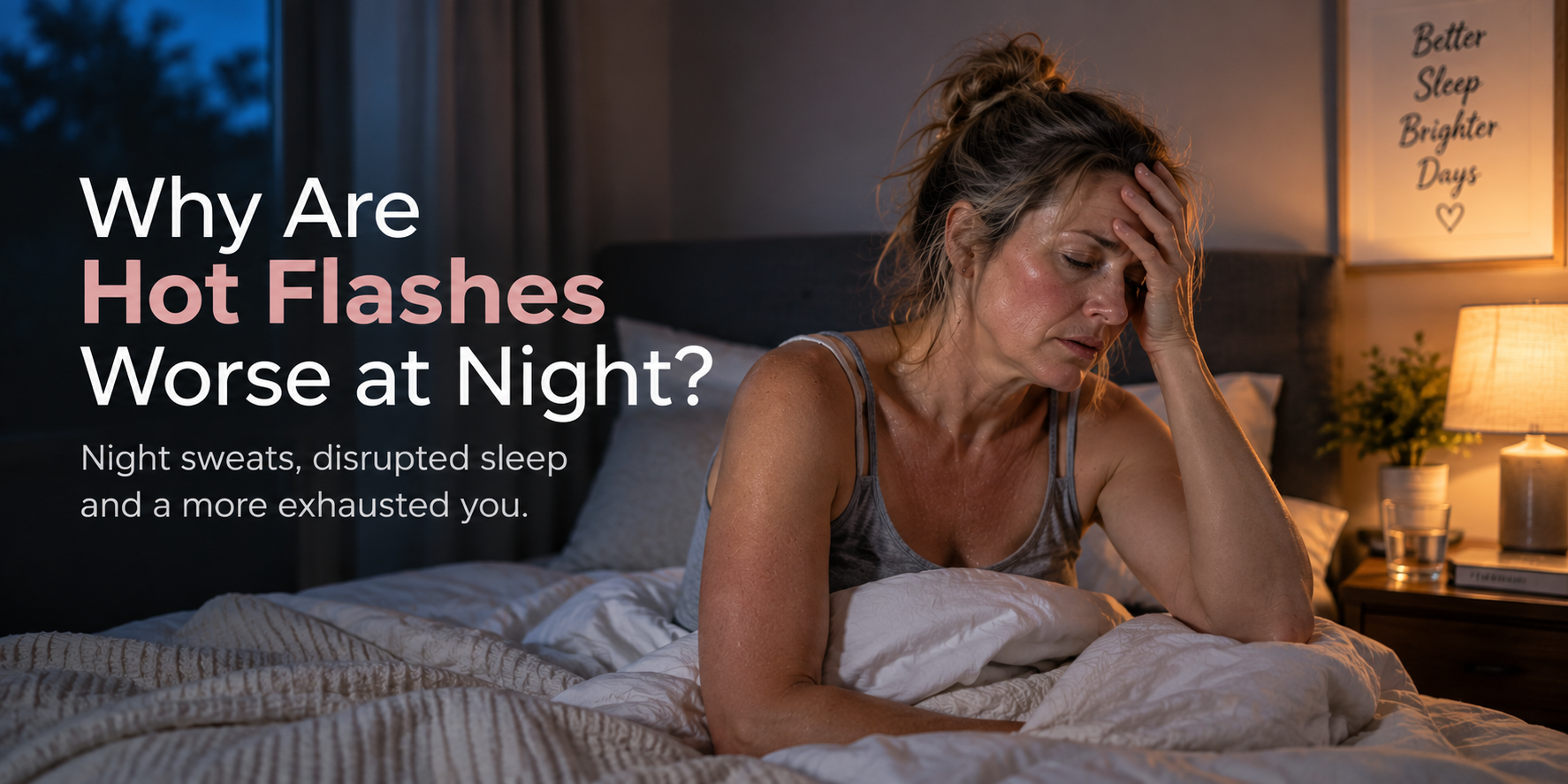
Why Are Hot Flashes Worse at Night?
You finally get comfortable and fall asleep.
Then suddenly you're wide awake, absolutely roasting.
Covers off. Pajamas damp. Maybe your hair is sweaty. A few minutes later you're cold again.
And now you're awake.
So why do hot flashes seem so much worse at night?
Your body's thermostat is more sensitive
During perimenopause and menopause, changing hormones can affect the way your brain regulates body temperature.
Think of it like your body's internal thermostat becoming more sensitive.
A small change in temperature can suddenly trigger your body to start releasing heat. You feel flushed, blood flow to the skin increases and sweating starts.
That's the hot flash.
Want to understand why this happens?
READ: WHAT CAUSES HOT FLASHES DURING PERIMENOPAUSE? →
Why nighttime can be so frustrating
Your body naturally changes temperature as you prepare for and move through sleep.
Now add your mattress, pajamas, sheets, duvet, bedroom temperature and maybe another person sleeping beside you.
Then throw a hot flash into the mix.
Suddenly you're awake, sweating and throwing off the covers.
But here's the part that really matters:
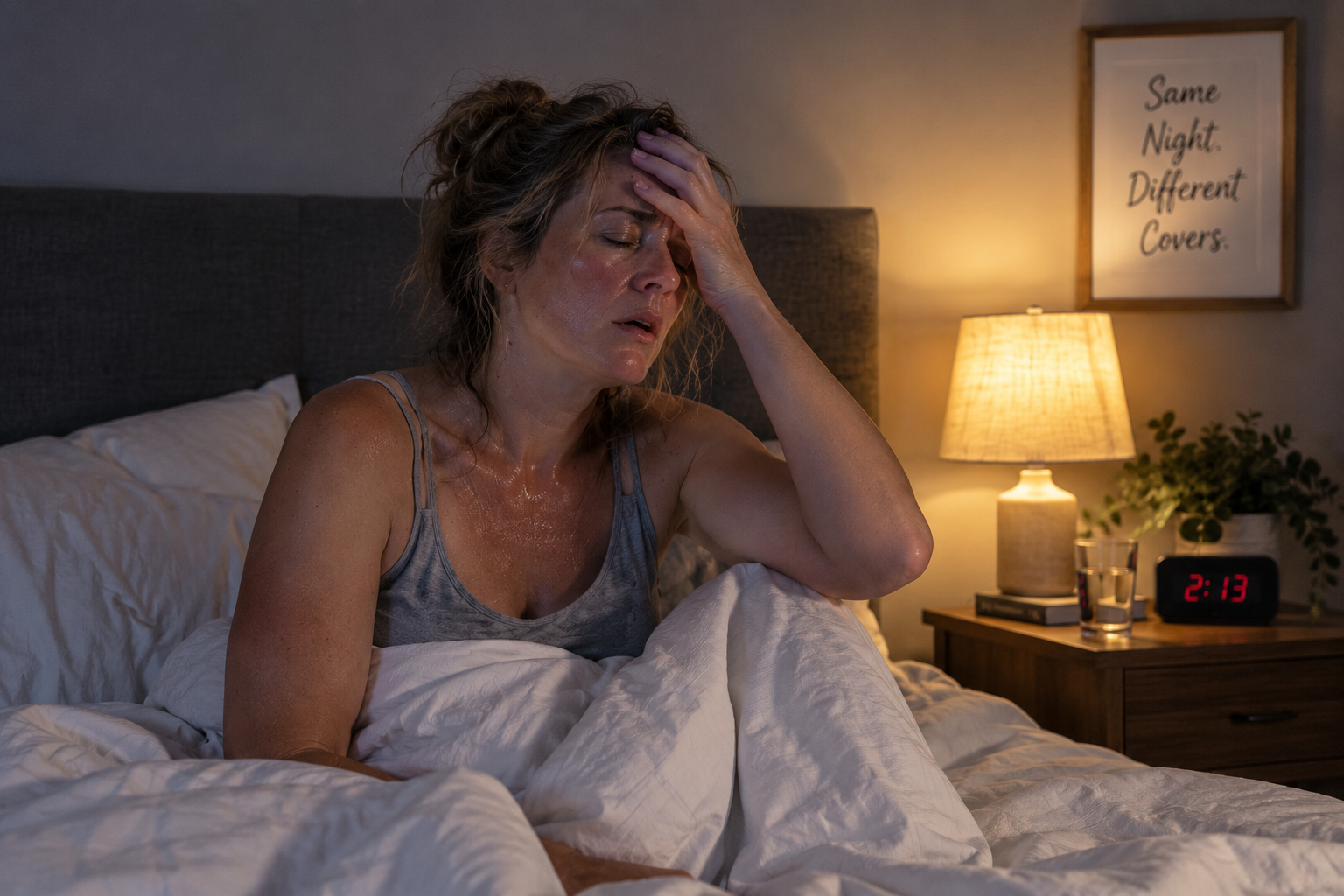
The Hot Flash Lasted MInutes, The Impact was Hours
You cool down. Now you're cold. The covers come back on.
Except you're awake.
Your brain turns on and suddenly it's 2:00 a.m. and you're thinking about tomorrow, work, the kids, or why the heck you can't get back to sleep.
A short nighttime hot flash can turn into hours of disrupted sleep and a rough next day.
Tired of hot flashes controlling your nights?
If you're ready to do more than just put up with them, I've created a 30-Day Hot Flash Relief Challenge to help you take the next step.
You'll track your hot flashes, night sweats and sleep while exploring a non-hormonal option for hot flash support.
Want me to explain it?
Sometimes this makes a lot more sense when you can actually hear the explanation.
I put together a video explaining why hot flashes happen, why nighttime can be particularly frustrating, common triggers, and the different options available to manage them.
Learn More About Your Hot Flashes And What You Can Do About Them.
WATCH ON YOUTUBE: WHY AM I GETTING HOT FLASHES? →
Start noticing your pattern
If nighttime hot flashes are becoming a problem, start paying attention to:
When they happen
How intense they are
How badly they interrupt your sleep
What your evening looked like beforehand
You don't need to track everything forever.
You're simply looking for patterns you may have been missing.
And once you understand the pattern, the next question becomes:
What can I actually do about it?
Ready to do something about your hot flashes?
If you're tired of guessing, I've created the 30-Day Hot Flash Relief Challenge.
You'll track your hot flashes, night sweats and sleep while exploring a non-hormonal option for hot flash support.
Try it. Track it. Assess it.
EXPLORE THE 30-DAY HOT FLASH RELIEF CHALLENGE →
Not ready for the Challenge?
Start with my free Hot Flash Survival Guide to better understand what's happening and explore your options.
GET THE FREE HOT FLASH SURVIVAL GUIDE →
Mark Kibyuk, Naturopath
MK Natural Health Services
St. John's, Newfoundland & Labrador
So, what can you actually do about hot flashes?
Understanding why hot flashes happen is helpful. But eventually you want to know one thing:
How do I make them better?
There are several approaches to managing hot flashes, from lifestyle changes and hormone therapy to non-hormonal treatment options.
