

Hot Flash Treatment Options: What Can You Actually Do About Them?
You understand why hot flashes happen.
Maybe you've started noticing when they happen or why some nights seem worse than others.
But eventually you get to the question that really matters:
What can I actually do about them?
The good news is you have options.
And no, you don't need to change everything in your life at once.
Start by looking for your pattern
Before you start eliminating foods, buying supplements or changing everything you're doing, spend some time noticing your hot flashes.
Are they worse at night?
Do they happen at certain times of day?
Are they disrupting your sleep?
Do some days seem much worse than others?
You don't need to track every little detail forever. You're simply trying to figure out whether there's a pattern you've been missing.
Look at the things you can control
This is where the internet can make things complicated.
You'll find huge lists of supposed hot flash triggers: coffee, alcohol, spicy foods, stress, sugar, certain clothing, your bedroom temperature...the list goes on.
But don't make yourself crazy trying to eliminate everything.
In fact, evidence that simply avoiding common triggers improves hot flashes across women isn't particularly strong.
Instead, pay attention to your own patterns.
Your sleep, stress, alcohol intake, smoking, overall health and environment are all reasonable things to consider.
And sometimes, managing the impact of a hot flash matters too. A cooler bedroom or changing what you sleep in may not fix the underlying hot flash, but it might make a rough night a little easier.
Want to know what to try next?
This is exactly why I created my FREE Hot Flash Survival Guide.
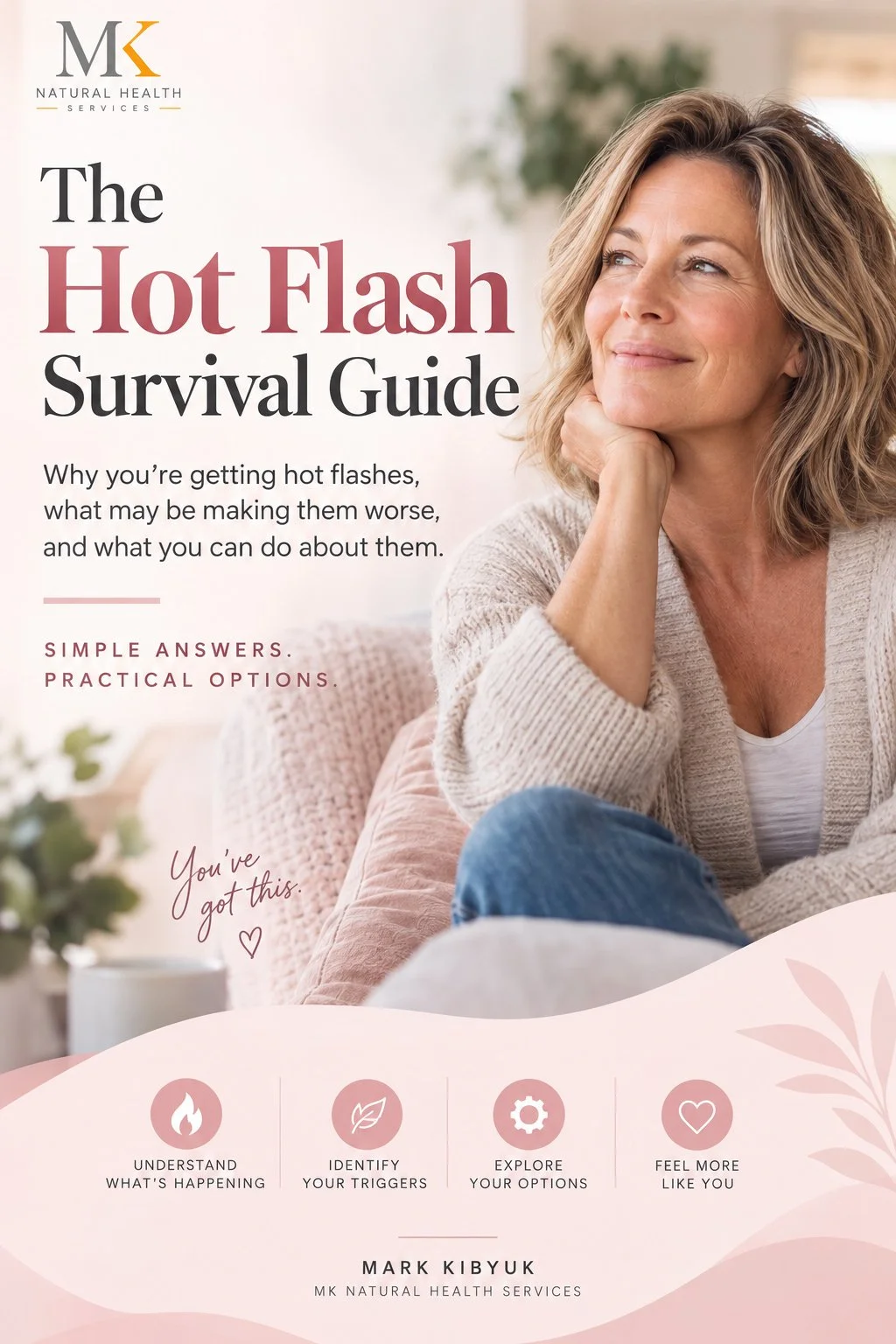
I wanted to give women one simple resource that explains:
What's actually happening during a hot flash
Why they can be worse at night
What may be making yours worse
What you should start paying attention to
Practical things you can try
The different treatment and non-hormonal options available
No giant list of things you need to change. Just straightforward information to help you understand your hot flashes and what you can do next.
Remember, you have options
Sometimes lifestyle changes and symptom management aren't enough.
There are established medical treatments for troublesome hot flashes, including hormone therapy and several non-hormonal prescription approaches. For appropriate women, systemic hormone therapy is considered a first-line treatment for troublesome hot flashes and night sweats.
There are also non-hormonal approaches for women who can't use hormones or don't want to.
The point isn't that one option is right for everyone.
It's that you have options.
And understanding those options makes it much easier to have a useful conversation about what might make sense for you.
There's a LOT of noise online
Search “hot flash treatment” and it won't take long before someone is telling you to cut out half your diet, “balance your hormones,” buy six supplements or follow their latest menopause protocol.
There's a lot of noise out there.
Some things have research behind them. Some have limited evidence. And some are simply being repeated over and over online.
You don't need to try everything.
Start by understanding what's happening. Look at your own symptoms. Learn about your options.
Then make decisions from there.
You don't have to figure it all out tonight
If you're reading this because hot flashes are starting to interfere with your sleep, your energy or just how you feel day to day, start simple.
Understand what's happening.
Notice your patterns.
Learn what your options are.
That's exactly what I created the Hot Flash Survival Guide to help you do.
GET MY FREE HOT FLASH SURVIVAL GUIDE
It's free, easy to read and gives you a practical place to start.
Next in the series...
Can You Manage Hot Flashes Without Hormones?
That's what we're looking at next.
Mark Kibyuk, Naturopath
MK Natural Health Services
St. John's, Newfoundland & Labrador
