
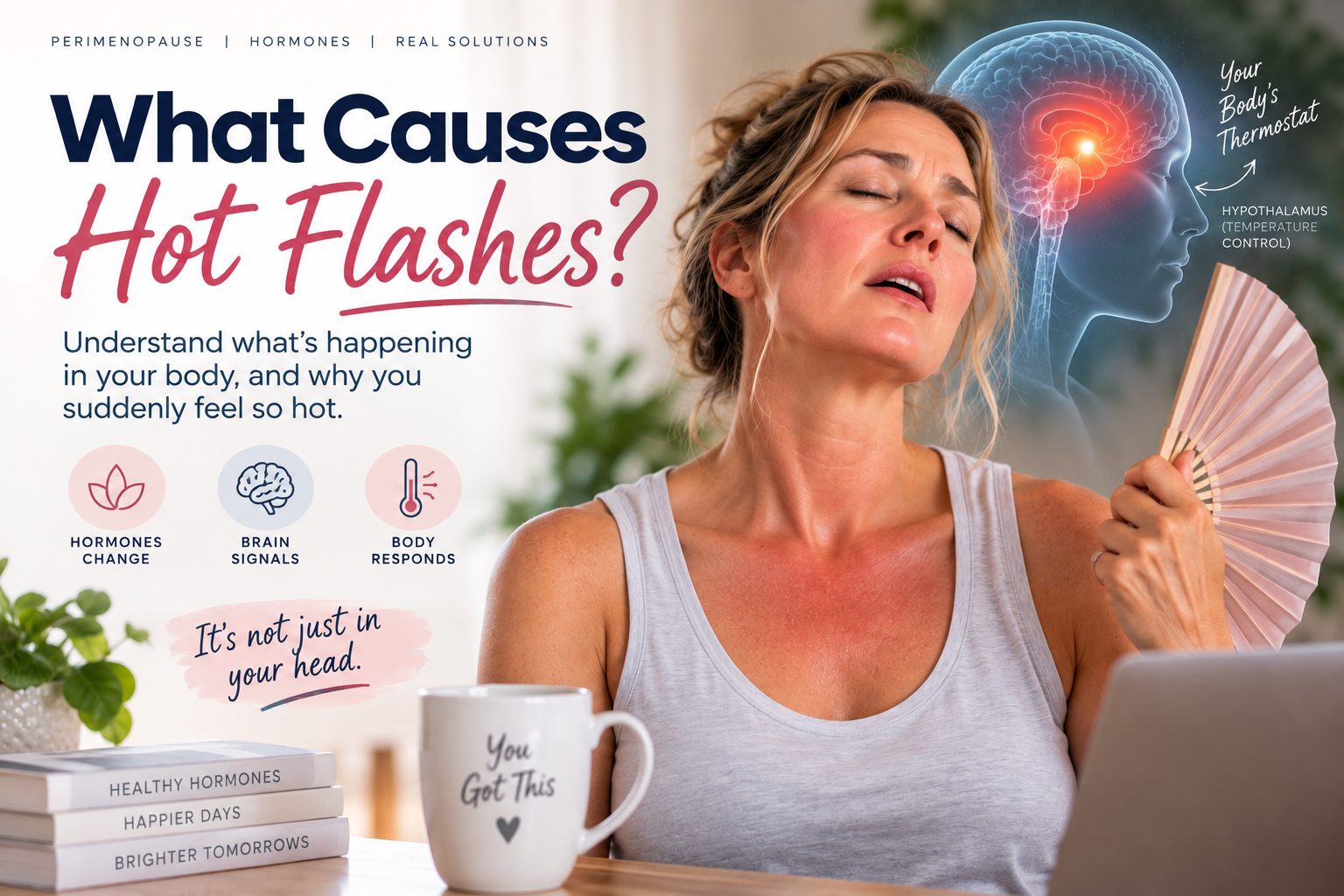
What Causes Hot Flashes During Perimenopause?
You're sitting at your desk, making supper, or relaxing on the couch.
Everyone else seems perfectly comfortable.
Then suddenly...
You're roasting.
Your face gets hot. Your chest flushes. You start sweating.
And a few minutes later, you might even feel cold.
If this has started happening to you during perimenopause, you've probably wondered:
What is actually causing my hot flashes?
The answer has a lot to do with your changing hormones.
Your hormones and your body's thermostat
What causes hot flashes? For many women in perimenopause, the answer starts with changing estrogen levels and the way those hormonal changes affect the brain's temperature-control system.
Think of your brain as having an internal thermostat.
Normally, your body has a comfortable temperature range. Small changes happen throughout the day and your brain doesn't really care.
During the menopause transition, that temperature-control system can become much more sensitive.
A relatively small change can suddenly cause your brain to respond as though:
“We're too hot. Get rid of heat!”
Your body reacts.
Blood vessels near your skin widen.
You flush.
You sweat.
Your body releases heat.
And sometimes, after all that heat loss, you end up feeling cold afterward.
That's the hot flash.
Here's the hormone connection
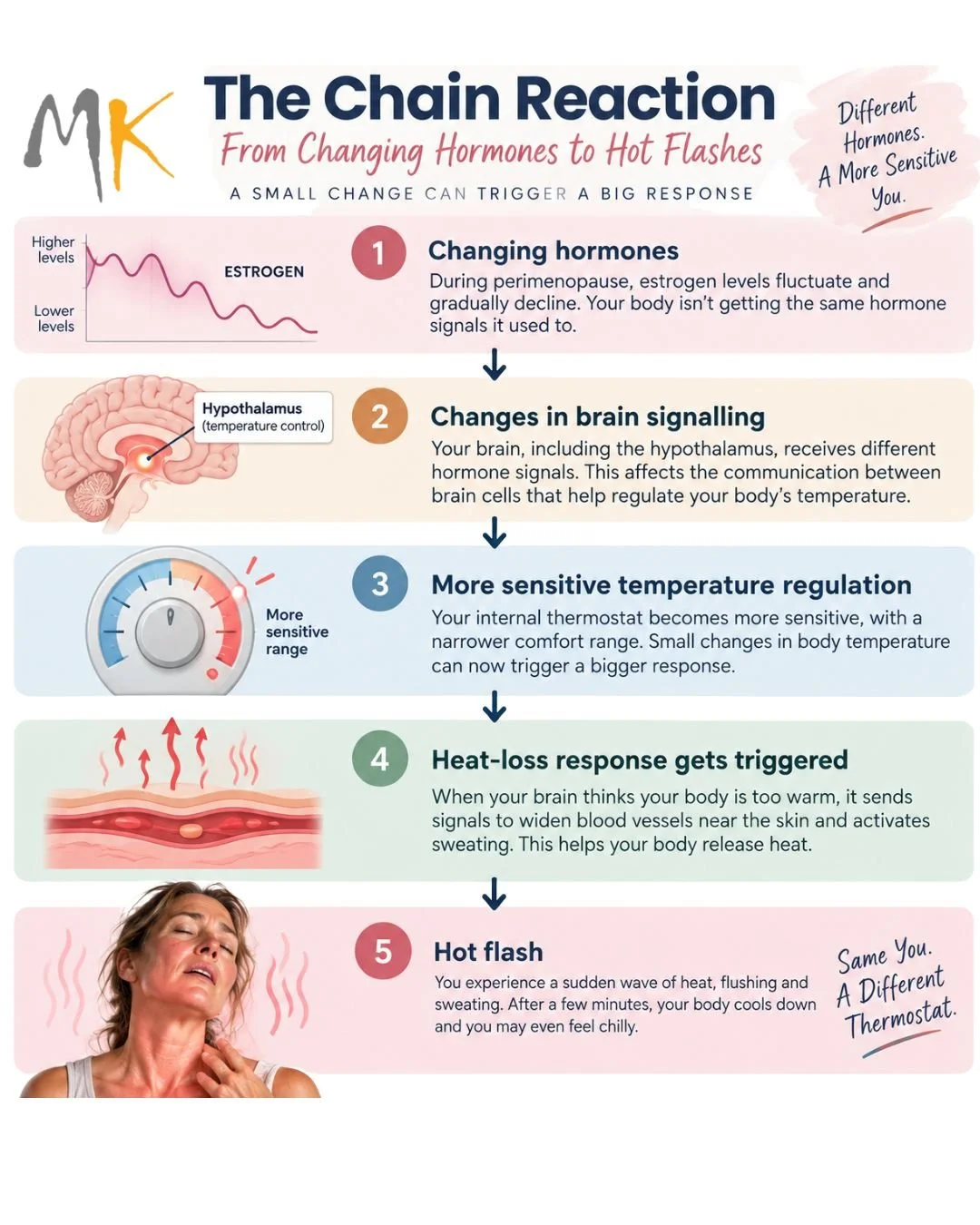
Your changing hormones are affecting the way your brain responds to temperature.
That's also why hot flashes can begin during perimenopause, even while you're still having periods.
Perimenopause is a transition. Your hormones can fluctuate considerably before your periods eventually stop.
So yes, you can still be getting your period and suddenly find yourself thinking:
“Why am I so hot all the time?”
There really is a biological connection.
Looking for hot flash relief? Start with the free guide.
Understanding why hot flashes happen is the first step.
The next question is usually:
“Okay...what can I actually do about them?”
That's exactly why I created my free Hot Flash Survival Guide.
Inside, I'll help you better understand your symptoms, what may be making them worse, what to start paying attention to, and the different options available for managing hot flashes.
You don't need to spend hours Googling this and trying to piece everything together yourself.
START HERE
Hot flashes are common during perimenopause and menopause.
But that doesn't mean you have to simply put up with them.
Next in the Hot Flash Series
Why Are Hot Flashes Worse at Night?
In the next article, we'll look at why nighttime can be particularly difficult and why a hot flash that lasts only a few minutes can sometimes affect how you feel the entire next day.
Mark Kibyuk
Naturopath
MK Natural Health Services
