
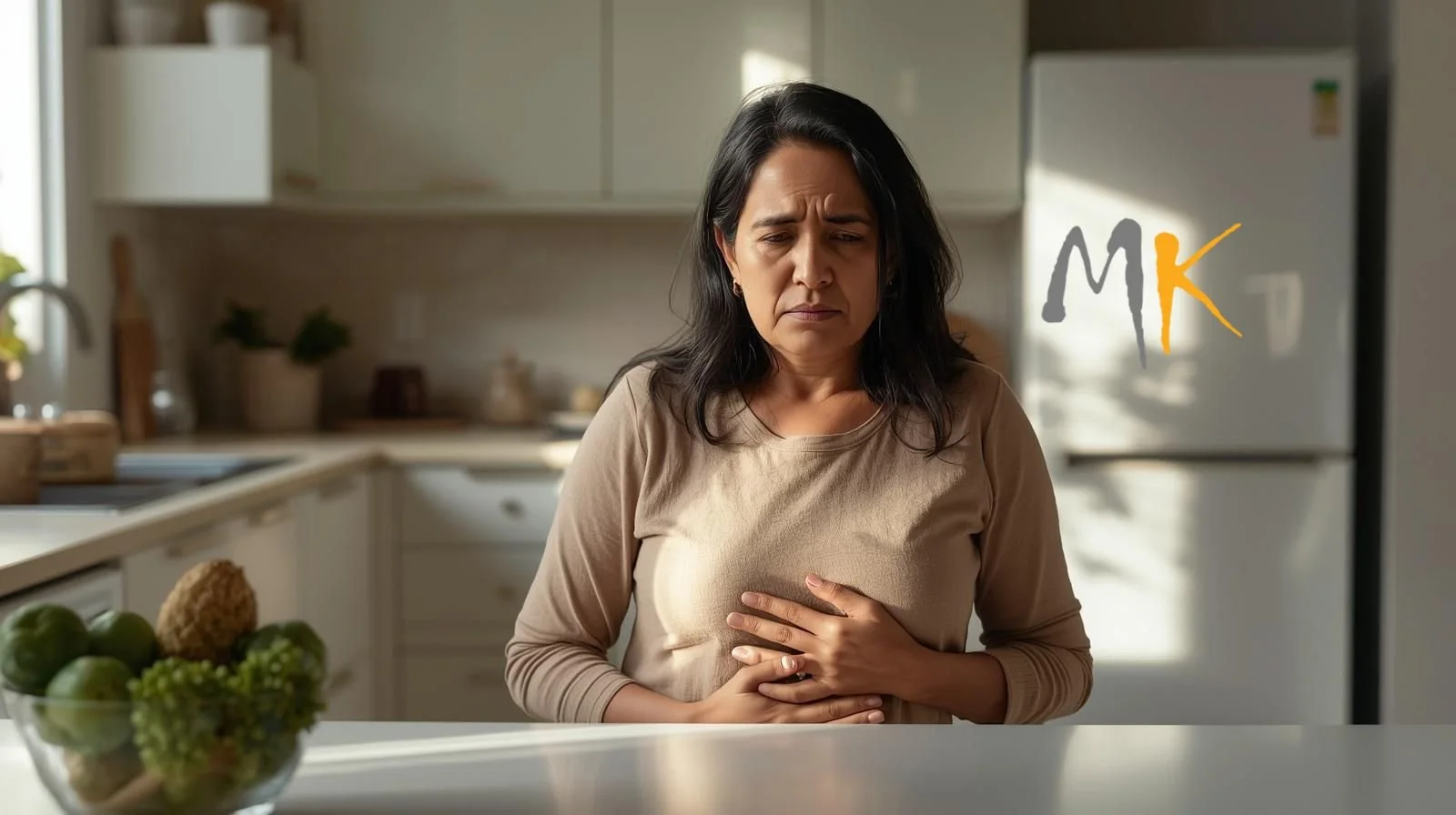
Many women notice something frustrating happening in their late 30s or early 40s.
Foods they used to tolerate suddenly start causing problems.
They might experience:
• bloating after meals
• constipation
• a heavier feeling in the stomach
• more gas than usual
• weight gain around the midsection
What makes this confusing is that many women are eating healthier than ever.
So why does digestion suddenly feel worse?
In many cases, these changes are connected to perimenopause and the gut.
Hormones influence many parts of digestion, and when hormone patterns start shifting, the digestive system often feels the effects.
How Hormones Influence Gut Health
Estrogen and progesterone do more than regulate the menstrual cycle.
They also interact closely with:
• the gut microbiome
• digestive enzymes
• intestinal movement
• inflammation in the gut lining
When hormone patterns begin fluctuating during perimenopause, these systems can change as well.
This is why many women notice digestive symptoms appearing at the same time as sleep problems, mood changes, or fatigue.
Changes in the Gut Microbiome During Perimenopause
Inside the digestive system lives a complex community of bacteria known as the gut microbiome.
These bacteria help with:
• digestion
• immune balance
• nutrient absorption
• hormone metabolism
One particularly important role of gut bacteria is helping process estrogen.
Some gut bacteria help break down and regulate estrogen levels in the body. This group of bacteria is sometimes referred to as the estrobolome.
When the microbiome becomes imbalanced, estrogen can circulate differently in the body, which may worsen symptoms such as bloating, inflammation, and weight gain.
Hormone shifts during perimenopause can also change the environment in the gut, sometimes allowing less helpful bacteria to grow more easily.
Supporting the microbiome with diet, probiotics, and digestive support can often improve these symptoms.
You can learn more about this in my article on probiotic support for digestive health.
Slower Digestion and Bowel Transit Time
Another common change during perimenopause is slower digestion.
Hormones help regulate how quickly food moves through the digestive tract.
When estrogen and progesterone fluctuate, intestinal movement can slow down.
This can lead to:
• constipation
• bloating after meals
• feeling overly full
• sluggish digestion
When food sits in the digestive tract longer than it should, bacteria have more time to ferment it.
This fermentation process can produce gas, which contributes to the bloating many women experience.
Supporting bowel movement regularity is often one of the first steps toward improving gut comfort.
Why Foods Suddenly Cause Bloating
Many women also notice that foods that used to feel fine now cause bloating.
This often happens because digestion becomes less efficient.
Two common reasons include:
Lower Digestive Enzyme Production
Digestive enzymes help break down proteins, fats, and carbohydrates.
If enzyme production becomes less efficient, food may not break down as completely.
When this happens, partially digested food can ferment in the gut and produce gas.
This can lead to:
• bloating
• pressure in the abdomen
• excessive gas
Digestive enzyme support can often improve how comfortably meals are digested.
Microbiome Imbalances
When the gut microbiome shifts, certain bacteria may ferment carbohydrates more aggressively.
This can make foods such as:
• onions
• garlic
• beans
• certain vegetables
• higher fiber foods
feel more bloating than they used to.
This does not necessarily mean these foods are unhealthy. It simply means the gut environment may need support.
The Gut–Hormone Connection
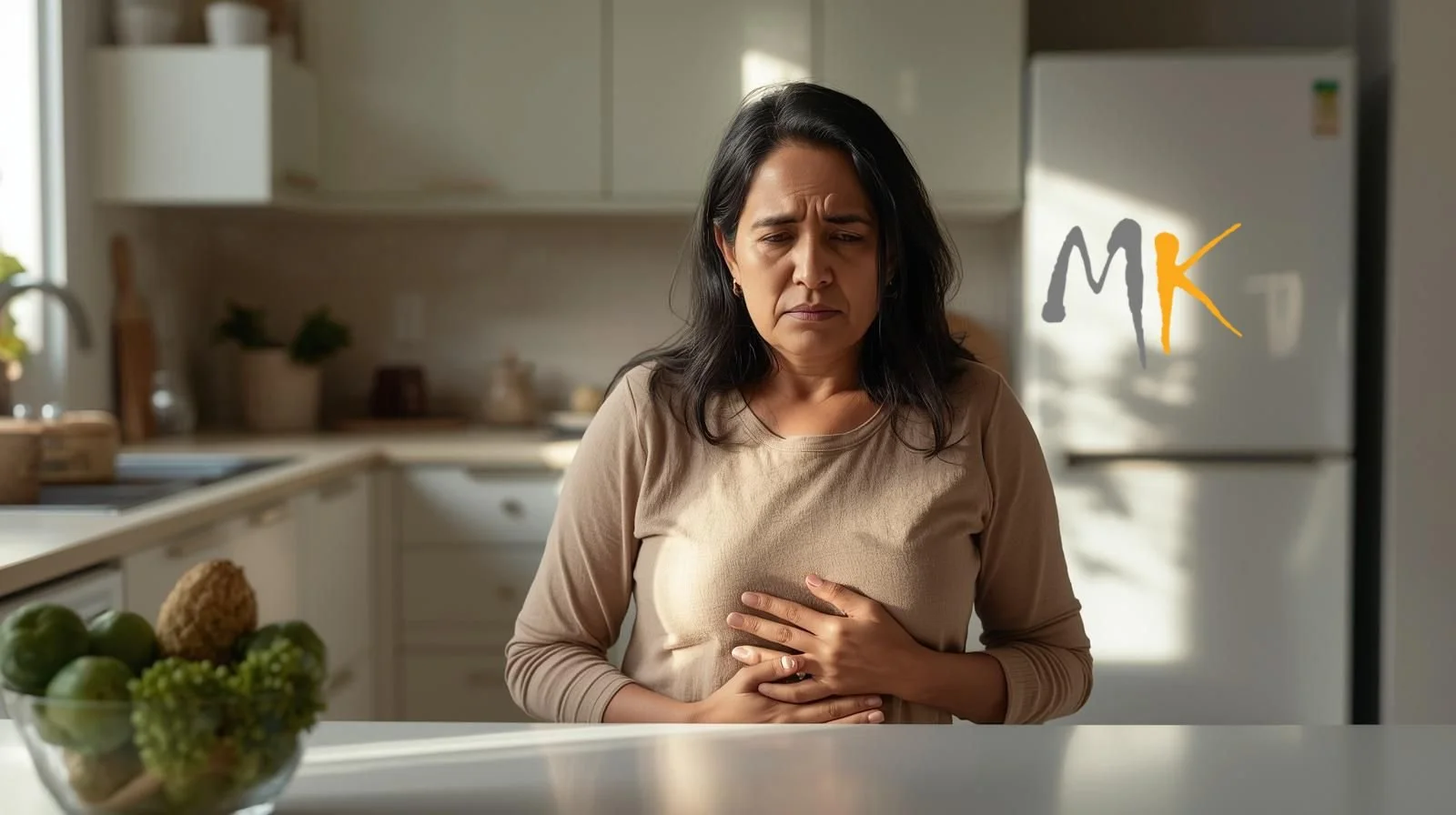
Another important factor to understand is that gut health and hormones influence each other.
A healthy microbiome helps regulate estrogen metabolism.
At the same time, hormone shifts influence the environment in the gut.
When both systems become slightly imbalanced during perimenopause, symptoms can appear quickly.
This is why supporting digestion often improves more than just gut symptoms.
Many women also notice improvements in:
• energy
• mood
• inflammation
• weight regulation
How I Support Gut Health During Perimenopause
In my practice, digestive symptoms during perimenopause are very common.
The encouraging news is that many women improve once we support a few key areas of digestion.
Some of the most helpful strategies include:
Supporting the Gut Microbiome
Probiotics and dietary strategies can help improve bacterial balance in the gut.
A healthier microbiome can support digestion, immune balance, and hormone metabolism.
Improving Food Breakdown
Digestive enzyme support can help the body break down meals more efficiently.
When food is digested more completely, symptoms such as bloating and gas often improve.
Supporting Regular Bowel Movements
Supporting healthy bowel movement patterns is important for reducing fermentation and improving gut comfort.
Nutrients such as magnesium, hydration, and fiber balance often play a role here.
Addressing Underlying Gut Imbalances
In some cases, deeper gut imbalances such as bacterial overgrowth or inflammation may need to be addressed.
This is where personalized nutrition strategies and targeted supplements can make a significant difference.
The Good News
Digestive symptoms during perimenopause are very common, but they are not something women simply have to live with.
Once the underlying digestive changes are addressed, many women experience noticeable improvements in bloating, bowel regularity, and overall comfort after meals.
Supporting gut health is often one of the most effective ways to improve how the body feels during this stage of life.
Coming Up Next in the Series
Another common symptom many women experience during perimenopause is sleep disruption and low energy.
In the next article we will explore:
Why Sleep Gets Worse During Perimenopause (and What Can Help)
We will look at why hormones influence sleep and energy, and some natural strategies that can help restore better rest.
If you would like help improving your digestion or understanding how perimenopause may be affecting your health, you can learn more about consultations at:
