
Many women enter their late 30s or early 40s and begin noticing changes in their body.
Sleep becomes lighter.
Mood can feel different.
Digestion changes.
Weight gain appears unexpectedly.
A very common thing I hear from women in practice is:
“I feel different, but I can’t explain why.”
In many cases, the answer comes back to something most women were never clearly taught:
how their hormone cycle actually works.
Once you understand the basic rhythm of your cycle, perimenopause suddenly makes much more sense.
What Is Perimenopause?
Perimenopause is the transition phase leading up to menopause where hormone patterns begin to change.
This stage can last several years and is often when women begin experiencing symptoms such as:
• poor sleep
• anxiety or irritability
• bloating or digestive changes
• weight gain
• irregular cycles
Understanding what is happening during this phase is the first step toward feeling better.
The Three Phases of a Healthy Menstrual Cycle
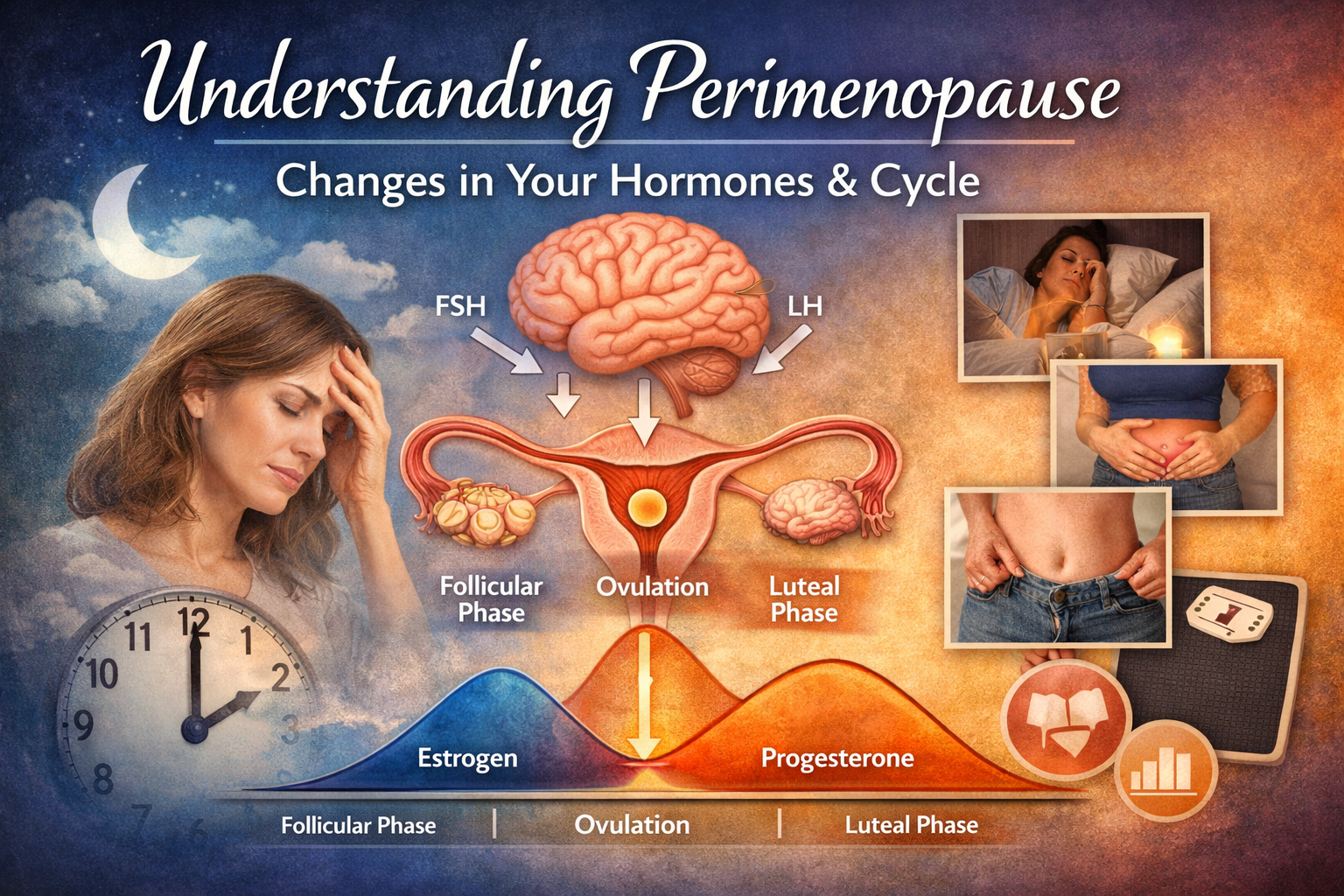
A typical menstrual cycle is controlled by communication between the brain and the ovaries.
Several hormones are involved in this process, including:
• estrogen
• progesterone
• LH (luteinizing hormone)
• FSH (follicle-stimulating hormone)
• prostaglandins
A healthy cycle moves through three main phases.
Phase 1: The Follicular Phase
This phase begins on the first day of menstruation and lasts until ovulation.
During this time, the brain sends signals to the ovaries through FSH and LH, encouraging follicles (which contain immature eggs) to develop.
As these follicles grow, estrogen levels begin to rise.
Estrogen supports:
• brain clarity and focus
• metabolism and energy
• mood and emotional stability
• circulation and tissue health
As estrogen rises, many women feel more energetic and clear-headed.
Phase 2: Ovulation
Ovulation is the most important event of the cycle.
When estrogen reaches a certain level, it triggers a surge in LH, which signals the ovary to release an egg.
This is critical because:
Ovulation determines whether progesterone will be produced.
After ovulation, progesterone begins to rise.
Phase 3: The Luteal Phase
After ovulation, progesterone becomes the dominant hormone.
Progesterone supports:
• calm nervous system function
• deeper, more restful sleep
• stable mood
• body temperature regulation
When progesterone is balanced, many women feel calmer and more grounded.
Why Ovulation Matters So Much
One of the most important concepts to understand is this:
Progesterone only rises when ovulation happens.
If ovulation becomes irregular or does not occur, progesterone levels will be lower.
This is a key reason why many perimenopause symptoms begin.
What Happens to Your Hormones During Perimenopause
During perimenopause, the ovaries do not stop working suddenly.
Instead, the communication between the brain and ovaries becomes less predictable.
The brain continues sending signals through FSH and LH, but the ovaries do not always respond consistently.
Ovulation may:
• happen later
• become irregular
• sometimes not occur
When this happens:
• progesterone becomes lower or inconsistent
• estrogen can fluctuate up and down
These fluctuations are what drive many perimenopause symptoms.
Why Perimenopause Symptoms Happen
Hormones influence many systems in the body. When they fluctuate, symptoms can appear.
Sleep Problems (Why You Wake at 2–4 AM)
Progesterone helps calm the nervous system.
When progesterone drops, sleep becomes lighter and more disrupted.
This is one reason many women begin waking between 2–4 AM.
Mood Changes and Anxiety
Estrogen and progesterone influence brain chemistry.
Fluctuations can lead to:
• anxiety
• irritability
• emotional sensitivity
Bloating and Digestive Changes
Hormones influence gut function and the microbiome.
Changes can lead to:
• bloating
• constipation
• food sensitivities
Check Out What You Can Do With Bloating Here
Weight Gain During Perimenopause
Hormones affect metabolism, insulin sensitivity, and fat storage.
When hormone patterns shift, weight gain can occur even without major lifestyle changes.
Here’s more on Perimenopause Weight Gain
Prostaglandins and Cycle Symptoms
Prostaglandins help regulate inflammation and uterine contractions during the cycle.
When they are elevated, women may experience:
• stronger cramps
• headaches
• inflammation
Learning to Understand Your Cycle
Many women were never taught how their cycle works.
But once you start paying attention, patterns often become clear.
You may notice:
• sleep changes before your period
• bloating around ovulation
• mood shifts in the luteal phase
Understanding these patterns helps you support your body more effectively.
How to Support Your Body During Perimenopause
Perimenopause can feel overwhelming, especially when multiple symptoms appear at once.
In practice, I often help women focus on supporting:
• sleep quality
• digestion and gut health
• stress and nervous system balance
• nutrient levels
Foundational support may include:
• magnesium
• B vitamins
• digestive enzymes
• probiotics
• stress-support nutrients
The Takeaway
Perimenopause is not a sudden event. It is a gradual transition where hormone communication becomes less predictable.
Understanding how your cycle works makes it much easier to understand why symptoms appear.
The good news is that with the right support, many women can begin feeling much better during this stage of life.
